|
The Yanquis Are Coming!
By Coley Hudgins
Published
08/18/2005
In the run-up to last month’s passage of the
Central America Free Trade Agreement (CAFTA), the anti-globalization
doomsayers were out in force with bold predictions
about the “final blow” the deal would mean
to the economies of Central American countries. Pro
free-traders argued just as vehemently that CAFTA was
a major step in building the foundations for a democratic
community of nations in our hemisphere.
What’s largely been overlooked from both sides
however may have little to do with CAFTA at all. Instead,
one of the biggest economic forces reshaping Central
America in the coming years may be a demographic shift
occurring right here in the Unites States spurred by
the massive retirement of the baby boomer generation.
According to a recent New York Times story, starting
in January of next year baby boomers — defined
as those born between 1946 and 1964 — will start
turning 60 at a rate of more than four million a year.
The leading edge of the baby boomers is beginning to
turn 59 now — the age when Americans can start
collecting certain retirement benefits without penalty.
The number of Americans 55 and older is expected to
skyrocket from 67 million this year to 97 million by
2020.
In many ways boomers are a different breed altogether
than the generations that preceded them. They are healthier,
live longer, and are more active, mobile and adventurous
than prior generations. Trends suggest many will continue
working beyond the traditional retirement age of 65,
launching second careers, becoming entrepreneurs or
focusing more on charitable and volunteer projects.
But in one fundamental way, baby boomers may not be
so different than their parents and grandparents. Consider
what I call the “Del Boca Vista” migration.
Del Boca Vista is the mythical Florida retirement
community Jerry Seinfeld’s parents, Helen & Morty
called home. Like Helen & Morty, the enduring cliché about
older Americans is that once retired they pack up their
belongings, bid adieu to colder climes, and move to
Florida to enjoy rounds of golf and blue plate specials
in Del Boca Vista-like retirement communities.
Like many stereotypes, this one contains a kernel
of truth. According to a 2001 American Demographics
study based on 2000 census data, Florida registered
the highest share of seniors of any state in the country
in the 90s, but other sun-belt centers like Phoenix,
Sacramento, Raleigh-Durham and Las Vegas were also
highly attractive “elderly magnets”
William Serow, professor of economics at Florida State
University in Tallahassee has been studying migration
patterns of the elderly for years, and believes that
since the end of World War II younger, more well-off “roving
retirees” in their 60s still instinctively seek
out warmer climates in “fun” places like
Arizona, North and South Carolina, and Florida.
According to Serow, the other key goal of this more
affluent group of retirees is reducing living expenses
by moving to sun-belt communities with cheap housing
and lower taxes. And therein lies the big conundrum
for today’s boomer retirees: Just as millions
of retiring baby boomers are getting ready to migrate
to warmer sun-belt states, these attractive retiree
destinations are experiencing skyrocketing real estate
prices and property tax assessments that may put these
locations out of reach for all but the most wealthy
boomers.
So, what’s the significance of all of this for
Central America? Tomorrow’s Del Boca Vista migration
won’t necessarily be to the sun-belt states in
the U.S. It’s just as likely that a large subset
of boomer retirees — call them “boomer
gringos” — will bypass southern sun-belt
states altogether for more affordable Central American
alternatives like Nicaragua, Costa Rica, Mexico, Panama,
Belize and Honduras. Most Central American countries
are still only a two or three hour flight back to the
states and have adequate infrastructures allowing retirees
to stay in touch with friends and loved ones back home — good
cell phone coverage, broadband Internet connections,
even satellite television.
Having recently returned from vacation in Nicaragua
and Costa Rica, the anecdotal evidence suggests it’s
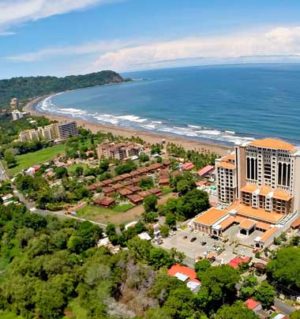
already happening. Costa Rica is experiencing a housing
boom that rivals anything here in the U.S. and is driven
in part by new boomer retirees. Two or three bedroom
homes that were selling for $270,000 in December of
last year are now selling for $350,000 and $400,000
in some parts of the country. While coastal areas may
be experiencing their own version of a housing bubble,
there are still very reasonable prices for many boomer
retirees.
The story to the north in Nicaragua — the second
poorest country in the Western Hemisphere, and a country
that still conjures up images of right wing dictators
and left-wing revolutionaries — is even more
interesting. Small coastal communities like San Juan
del Sur and cities like Granada are swarming with retired
ex-pat boomers who are buying land and building dream
retirement beach-front homes for a fraction of what
it would cost in the U.S.
Costa Rica: Imposes no tax on income earned outside
the country, and allows retirees to buy into the national
health care system offering care at public hospitals
by participating doctors, many of whom are U.S. educated.
Mexico: Retirees can qualify for “rentista visas” that
are renewable annually for five years, and require
only that retirees show a minimum income of $1000 per
month. Retirees can join the national HMO for about
$200 per person per year.
Nicaragua: The government recently passed Law 306
that includes provisions exempting qualified investors
from paying income or property taxes for up to 10 years,
and providing generous exemptions from import duties
for “pensioners” and investors that qualify.
Panama: Positioning itself as the world’s greatest
retirement destination. Retirees pay no real estate
or property taxes for 20 years.
Honduras: Doctors visits are typically around $15,
and pharmaceutical drugs cost 30% to 50% less than
in the United States. Honduras offers a one-time exemption
from all import duties for retirees, and allows retirees
to bring in one car or boat duty free every five years
Remax and Century 21 have opened offices in the country,
and affordable housing developments on some of the
most coveted and pristine coastlines in the Americas
are now dotting Nicaragua’s Pacific coast. New
developments like Rancho Santana, Iguana Beach and
Guacalito have launched sophisticated marketing campaigns
to attract boomer retirees, and publications geared
towards retirees like International Living are hosting
retirement summits and conferences to sell Nicaragua
as a retirement destination.
In Mexico, previously unknown towns like Ajiic, on
the shores of Lake Chapala have attracted tens of thousands
of boomer gringos as well. NPR reported last year that
here retirees can have a furnished home, cheap dining
and the part time services of a maid and gardener for
less than $2000 a month. According to NPR, more than
one million Americans now call Mexico home.
While exact figures are difficult to obtain, the U.S.
State Department estimates that about 380,000 Social
Security checks are delivered to beneficiaries outside
the U.S. each month. Almost four million Americans — not
including embassy officials and the military — are
now living overseas, although how many of those ex-pats
are retirees is unknown.
What is known is that governments in Central America
are luring gringos with new laws that include impressive
incentive packages for retirees. And despite the inherent
volatility and political risks that remain in many
of these countries, boomer gringos (and Central American
governments themselves) are betting that the economic
benefits of a retiree migration to Central America
will be a two way street. Retirees get a lower cost
of living, warm weather and cheap housing and create
a virtuous cycle in return — more retirees equals
more local jobs, resulting in more economic stability
and less political instability, resulting in more retirees.
But will this new economic model pay dividends? Serow
figures that each retiree household in the U.S. is
responsible for a little more than one job being attracted
to the community. While he cautions that such jobs
tend to fall into the low-paying, service category
here in the US., for developing economies that are
starting at close to zero, service jobs are the best
way to get a first foot on the economic ladder.
And it appears that many are already climbing the
ladder. The national newspaper in Nicaragua La Prensa
published a story earlier this year about how the boom
in tourism and the influx of retirees has benefited
the economy. The story described workers who no longer
had to look for seasonal work six months out of the
year as “illegals” in more developed Costa
Rica because they were now employed as full-time laborers
close to home building housing developments for a new
wave of foreign investors.
And while the debate rages here at home about the
impact of illegal immigration on our own economy and
government services, there’s no question that “low-paying” service
jobs here in the U.S. filled largely by illegal immigrants
benefits local communities back home. (Remittances
from foreign countries like the U.S. to family in Mexico
is one of the largest sources of foreign currency in
the country)
Wouldn’t it be more beneficial to Central American
countries if in the future these service jobs were
created locally by an influx of American retirees?
It’s possible that the emigration of wealthy
boomer gringos to Central America in the years ahead
could slow illegal immigration here as workers become
part of a home-grown service economy driven by retirees.
Are American retirees a panacea for Central American
economies? Not by a long shot. There are still fundamental
economic and political issues that will need to be
addressed by the governments themselves that neither
an influx of retirees or CAFTA will completely mitigate.
Stamping out corruption, increasing government transparency,
and bolstering education and the rule of law all need
to be top priorities at home before the hemisphere
can develop strong and sustained economic growth.
But the facts seem to indicate that barring some unexpected
political upheaval or economic calamity, the Yanquis
are going to keep on coming in larger and larger numbers.
Central American governments have already placed their
bets. They see our retirees not as a drag on the economy
as we here in the U.S. often do, but as a potentially
huge source of much needed capital, investment and job
creation. The smart money should be betting that they’re
right.
Costa
Rica Development Land Real Estate
Puerto
Azul Resort and Marina
Coley Hudgins is a Washington D.C. based government
affairs consultant. He has lived and worked in West
Africa, and has traveled extensively throughout Central
America and Asia.
|